

- Ankle
- Bimalleolar fracture
- Fibular fracture
- Osteotomy
- Subcutaneous emphysema
- Tibial pilon fracture
- Trimalleolar fracture
- Unimalleolar fracture (lateral)
- Arm
- Humeral shaft fracture
- Nightstick fracture
- Proximal humerus fracture
- Pt 8: Investigation
- Pt 9: Investigation
- Pt 10: Preoperative evaluation
- Pt 10: Postoperative control
- Pt 16: Investigation
- Torus of the distal radius
- Elbow
- Capitellum fracture
- Condyle fracture
- Distal humerus fracture
- Elbow dislocation
- Intercondylar fracture
- Intra-articular swelling
- Monteggia fracture
- Olecranon fracture
- Radial head fracture
- Supracondylar fracture
- Trochlear fracture
- Foot
- Calcaneus fracture
- Clubfoot
- Cuboid fracture
- Enthesopathy
- Hallux valgus
- Jones fracture
- Lisfranc fracture
- Metatarsal fracture (1st)
- Metatarsal fracture (4th)
- Metatarsal fracture (5th)
- Metatarsophalangeal luxation
- Metatarsus varus
- Osteomyelitis
- Phalangeal fracture
- Pseudo-Jones fracture
- Rheumatoid arthritis
- Sesamoid luxation
- Talus fracture
- Hand
- Bennett fracture
- Boxer's fracture
- Interphalangeal luxation
- Metacarpal fracture (4th)
- Metacarpal fracture (5th)
- Metacarpophalangeal luxation
- Phalangeal arthrosis
- Radiocarpal arthritis
- Reverse Bennett fracture
- Rheumatoid arthritis
- Rhizarthrosis
- Rolando Fracture
- Hip
- Acetabular fracture
- Pt 11: Preoperative evaluation
- Pt 11: Postoperative control
- Pt 13: Investigation
- Pt 65: Investigation
- Avascular necrosis
- Coxa magna
- Coxa plana
- Coxarthrosis
- Pt 19: Preoperative evaluation
- Pt 72: Investigation
- Pt 78: Preoperative evaluation
- Pt 78: Postoperative control
- Pt 79: Preoperative evaluation
- Pt 79: Postoperative control
- Pt 80: Preoperative evaluation
- Pt 80: Postoperative control
- Developmental dysplasia of the hip
- Femoral head fracture
- Femoral head fracture-dislocation
- Femoral neck fracture
- Pt 17: Preoperative evaluation
- Pt 17: Postoperative control
- Pt 18: Preoperative evaluation
- Pt 18: Postoperative control
- Pt 18: Postoperative control
- Pt 19: Preoperative evaluation
- Pt 19: Postoperative control
- Pt 20: Preoperative evaluation
- Pt 20: Postoperative control
- Pt 21: Preoperative evaluation
- Pt 21: Postoperative control
- Heterotopic calcification
- Intertrochanteric fracture
- Pt 13: Investigation
- Pt 22: Preoperative evaluation
- Pt 22: Postoperative control
- Pt 23: Preoperative evaluation
- Pt 23: Postoperative control
- Pt 24: Preoperative evaluation
- Pt 24: Postoperative control
- Legg-Calvé-Perthes disease
- Os acetabuli
- Periprosthetic fracture
- Slipped capital femoral epiphysis (SCFE)
- Subtrochanteric fracture
- Total hip prothesis dislocation
- Knee
- Bone graft
- Enchondroma
- Femoropatellar arthrosis
- Gonarthrosis
- Pt 82: Investigation
- Pt 82: Postoperative control
- Pt 83: Preoperative evaluation
- Pt 83: Postoperative control
- Pt 84: Preoperative evaluation
- Pt 84: Postoperative control
- Intra-articular swelling
- Pt 44: Preoperative evaluation
- Pt 70: Preoperative evaluation
- Pt 82: Investigation
- Pt 83: Preoperative evaluation
- Kirschner wire
- Osteochondral lesion
- Osteochondritis dissecans
- Osteophytes
- Patellar fracture
- Tibial plateau fracture
- Pt 35: Preoperative evaluation
- Pt 35: Postoperative control
- Pt 36: Preoperative evaluation
- Pt 36: Postoperative control
- Pt 50: Preoperative evaluation
- Pt 50: Postoperative control
- Tibiofemoral luxation
- Leg
- Femoral shaft fracture
- Pt 42: Preoperative evaluation
- Pt 42: Postoperative control
- Pt 43: Preoperative evaluation
- Pt 43: Postoperative control
- Fibular fracture
- Fibular shaft fracture
- Maisonneuve fracture
- Phlebolith
- Tibial shaft fracture
- Neck
- Edema
- Halo
- Pelvis
- Ischial enthesopathy
- Ischiatic ramus fracture
- Pubic ramus fracture
- Sacral fracture
- Vascular calcifications
- Shoulder
- Acromioclavicular arthrosis
- Acromioclavicular luxation
- Pt 88: Investigation
- Pt 91: Preoperative evaluation
- Pt 91: Postoperative control
- Pt 92: Investigation
- Clavicle fracture
- Glenohumeral arthrosis
- Glenohumeral dislocation
- Hill-Sachs fracture
- Rotator cuff tear
- Scapular fracture
- Spine
- Burst vertebral fracture
- C1 fracture
- C1-C2 instability
- C5 fracture
- Cervical fracture-dislocation
- Discarthrosis
- Facet arthrosis
- Flexion-distraction fracture
- Forestier disease
- Odontoid fracture
- Retrolisthesis
- Rheumatoid arthritis
- Scoliosis
- Spondilolysthesis
- Uncarthrosis
- Wedge fracture
- Thorax
- Rib fracture
- Wrist
- Avulsion fracture of the ulnar styloid
- Pt 11: Postoperative control
- Pt 31: Preoperative evaluation
- Pt 57: Preoperative evaluation
- Pt 57: Postoperative control
- Barton's fracture
- Chauffeur's fracture
- Colles fracture
- Pt 30: Preoperative evaluation
- Pt 30: Postoperative control
- Pt 31: Preoperative evaluation
- Pt 31: Postoperative control
- Distal radius fracture
- Galeazzi fracture
- Perilunate fracture-dislocation
- Physeal injury of the distal radius
- Radial styloid fracture
- Radioulnar joint disruption
- Reverse Barton's fracture
- Scaphoid fracture
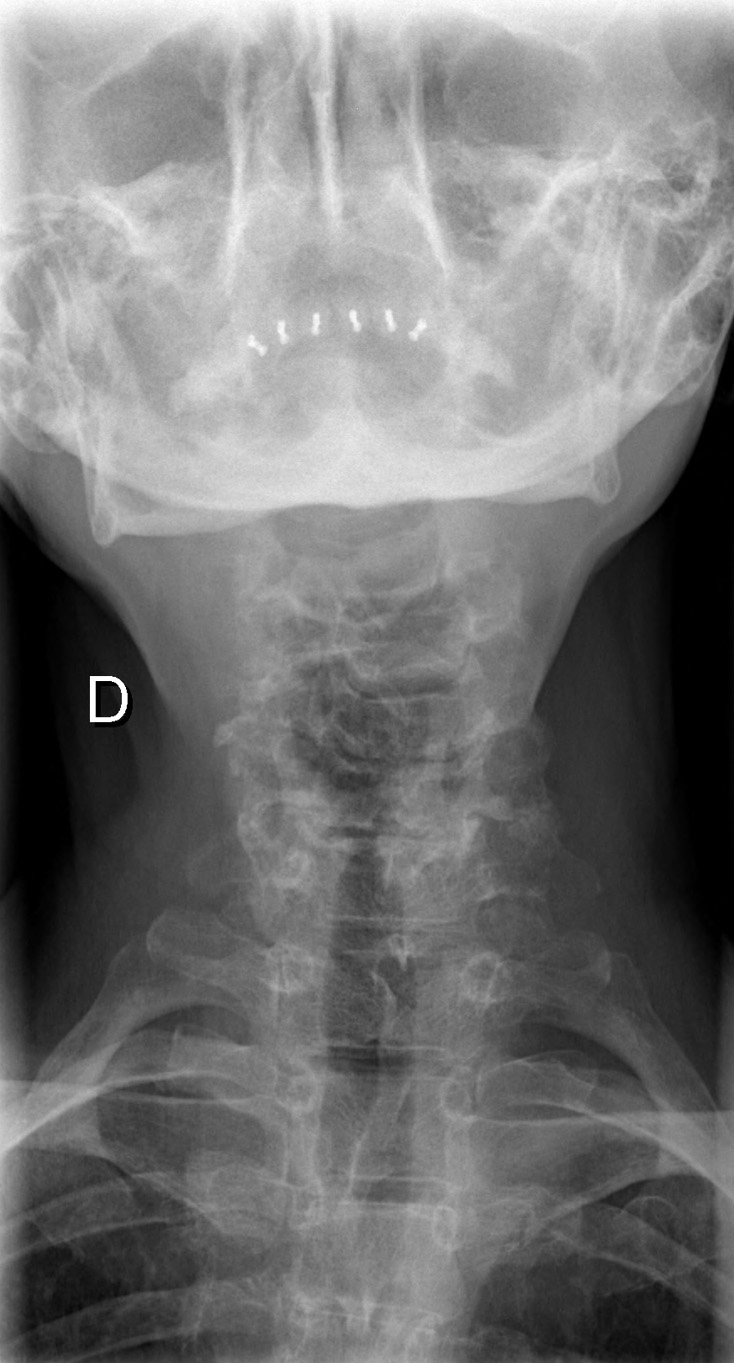
69-year-old female:
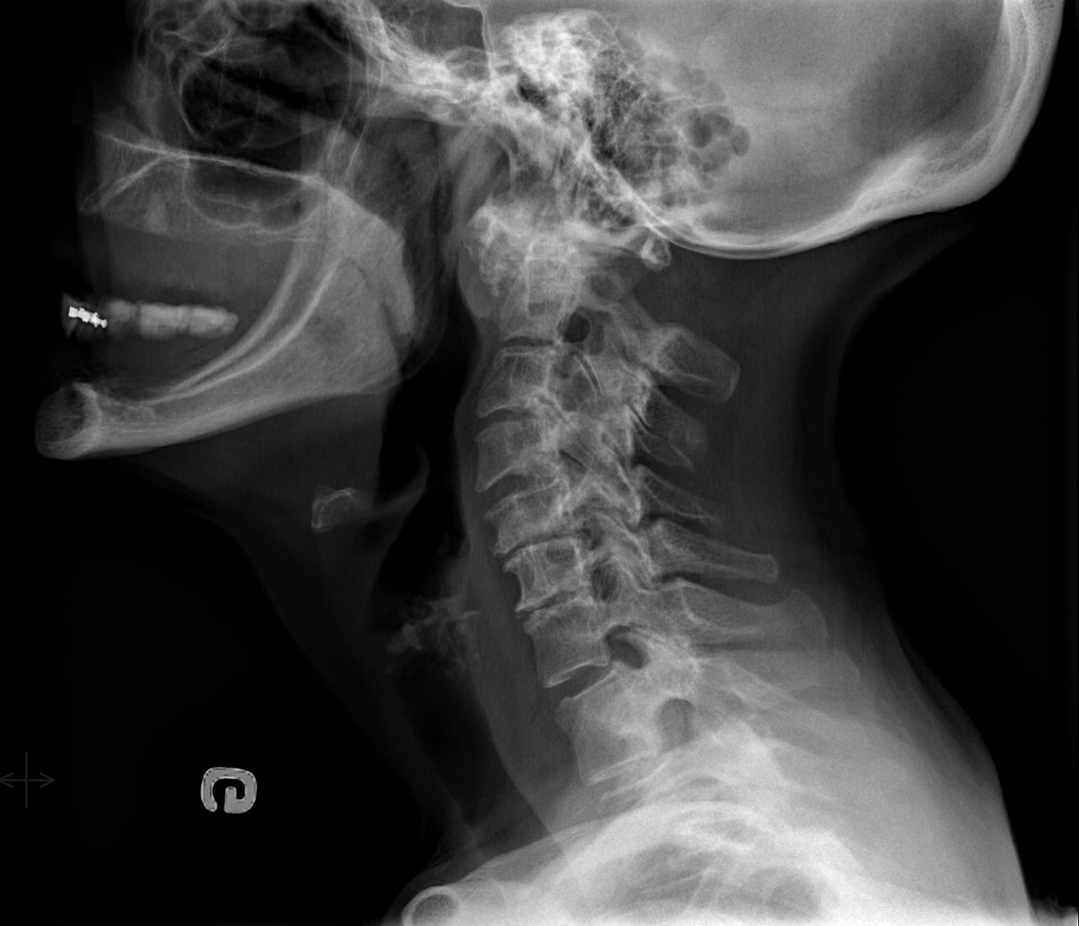
Preoperative cervical spine stability assesment of a patient known for rheumatoid arthritis.
Preoperative cervical spine stability assesment of a patient known for rheumatoid arthritis.
C1-C2 instability
Rachis misalignment
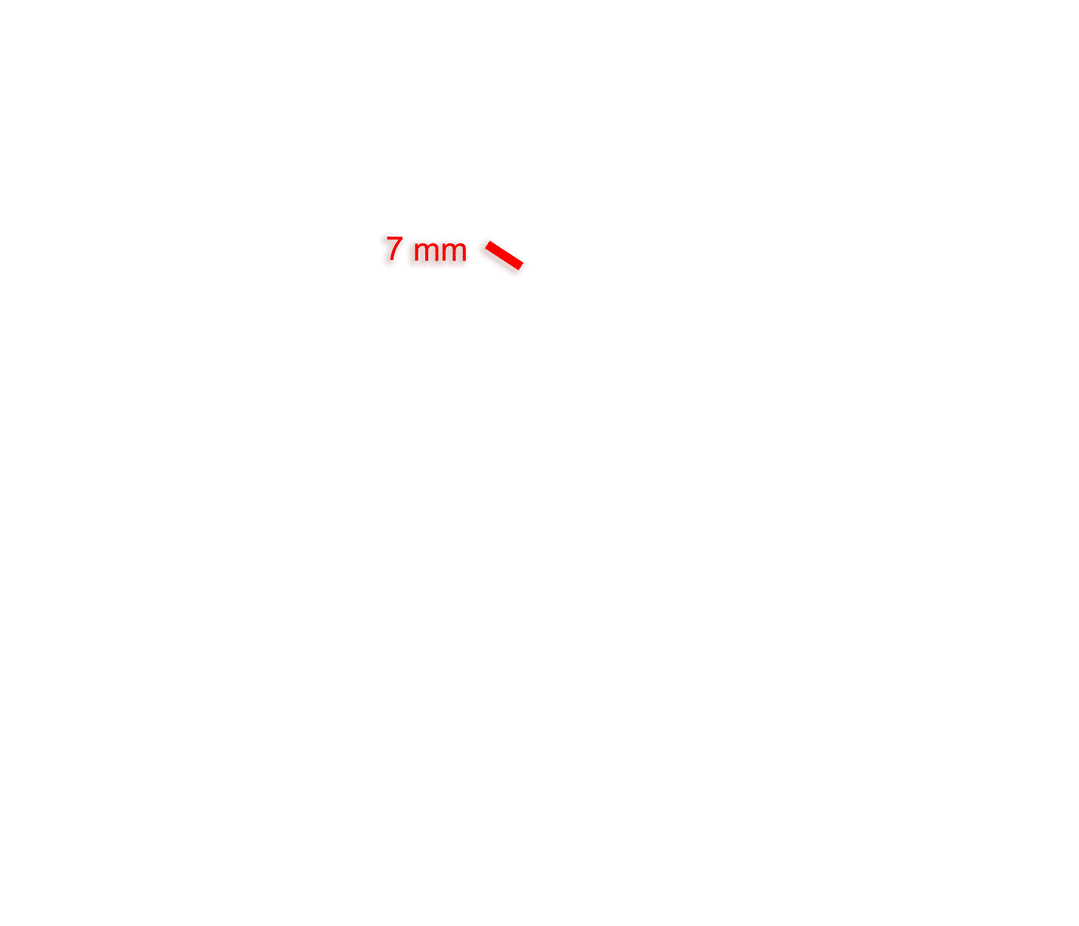
ADI (Atlas Dens Interval): the distance between the atlas (C1) and the odontoid anterior aspect is increased to 7.3 mm (normal below 3 mm), signaling C1-C2 instability.
C1
C1 (atlas) is a ring without a body (embryologically, the C1 vertebral body fuses with C2 to become the odontoid process).
C2
C2 (axis) vertebrae is marked here with its body and arch. The odontoid process is the superior part of C2 and corresponds embryogically to the vertebral body of C1.
PADI
PADI (posterior atlas-dens interval) is measured between the odontoïd posterior aspect and C1 posterior arch. This is the available space for the spinal cord. Its is measured here at 10 mm, which is not acceptable.
Ranawat line
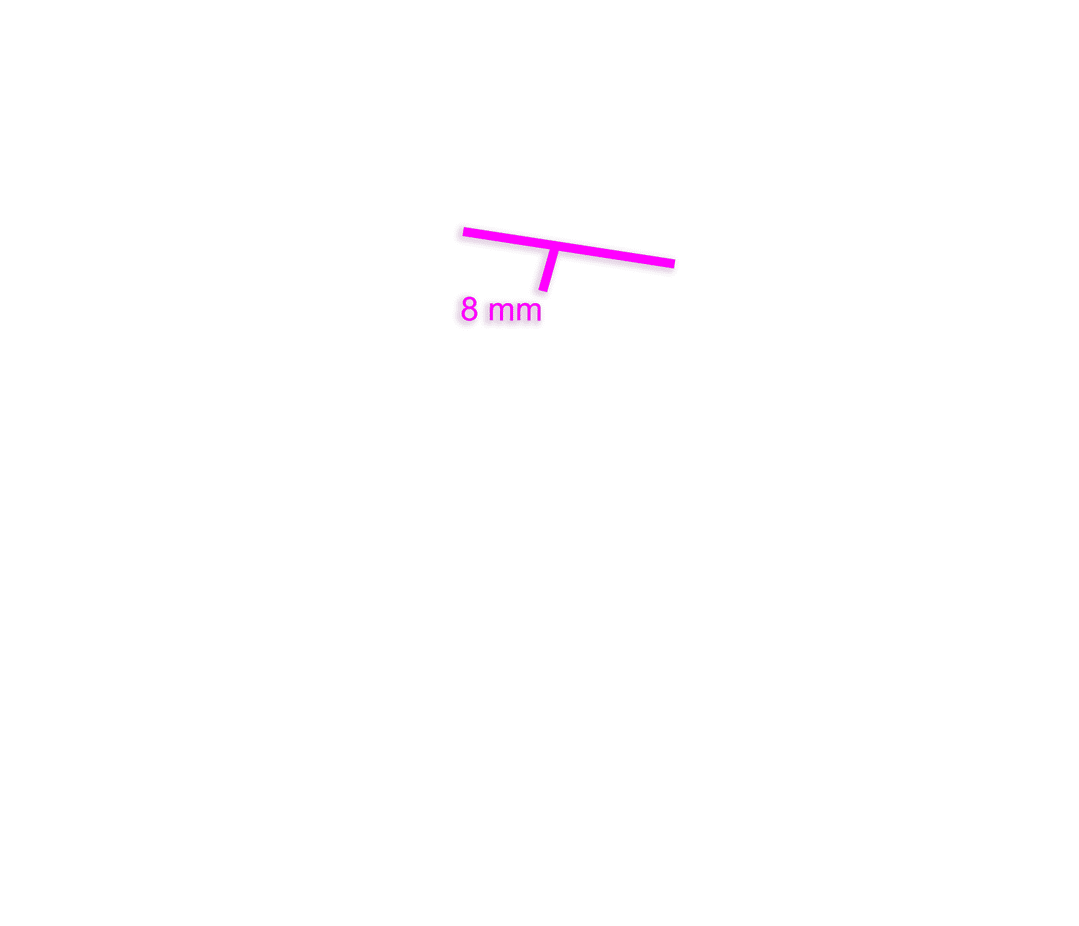
Ranawat line: first, draw a line between the anterior aspect of C1 and its posterior arch, then mark a point in the odontoid at the C2 pedicles level. Ranawat line is the distance between this point and the C1 line and is measured here at 8 mm (normally of 15 mm in men and 13 mm in women), thus significantly decreased.
Pannus
Rheumatoid arthritis
Irregular hyperdensities
This C1-C2 instability and the presence of calcifications in the C1-C2 articular space are highly suggestive of an important rhumatoïd pannus.
Discarthrosis
Joint space narrowing
Multiple important intervertebral joint narrowing and osteophytes at C5-C6 and C6-C7 secondary to degeneration.
Uncarthrosis
Joint space narrowing
Moderate C5-C6 and C6-C7 uncarthrosis more pronounced on the left side than on the right. Unco-vertebral joints are often the sites of degenerative changes.
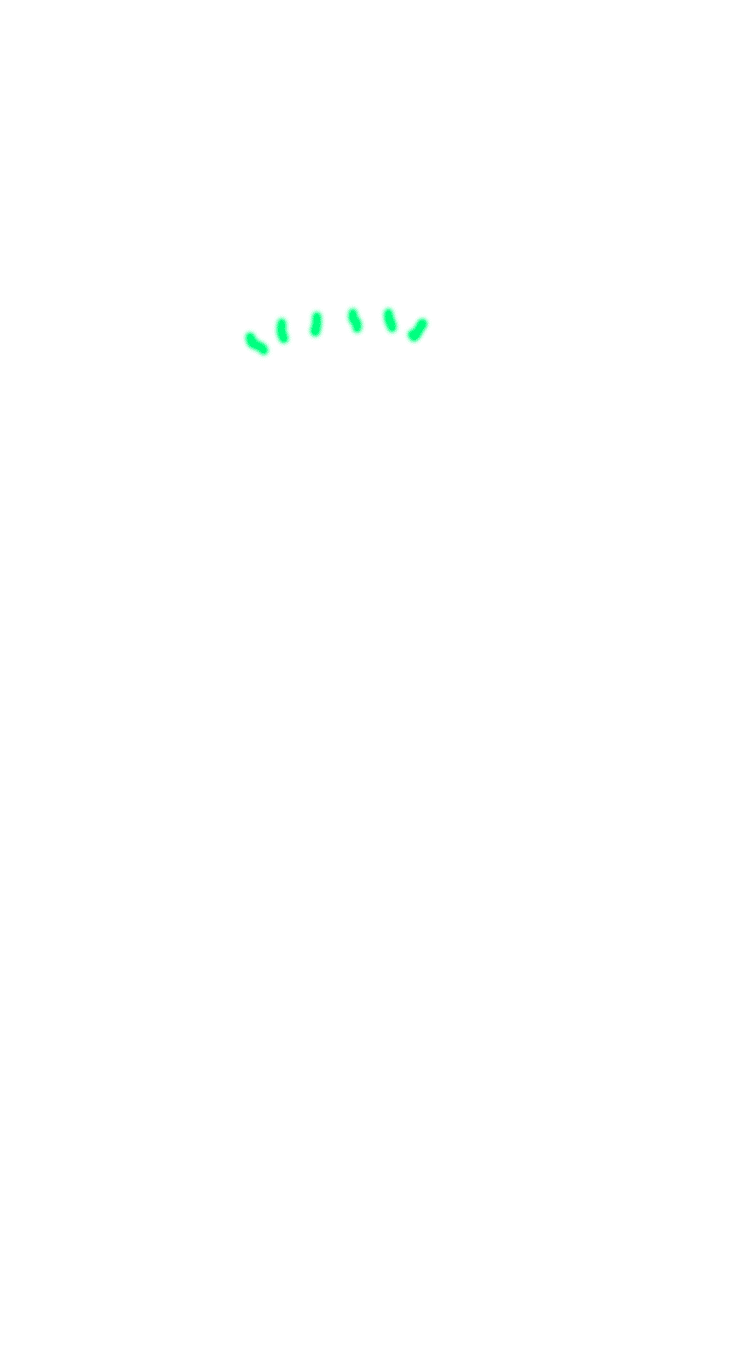
Dental fillings
Six dental fillings can be seen.
Related chapters
- Atelectasie
- Pneumonie







Zoom:

test


Zoom:
test
.jpg
.png
223
2
9
../ortho/resources/studies/
../sandbox/