

- Ankle
- Bimalleolar fracture
- Fibular fracture
- Osteotomy
- Subcutaneous emphysema
- Tibial pilon fracture
- Trimalleolar fracture
- Unimalleolar fracture (lateral)
- Arm
- Humeral shaft fracture
- Nightstick fracture
- Proximal humerus fracture
- Pt 8: Investigation
- Pt 9: Investigation
- Pt 10: Preoperative evaluation
- Pt 10: Postoperative control
- Pt 16: Investigation
- Torus of the distal radius
- Elbow
- Capitellum fracture
- Condyle fracture
- Distal humerus fracture
- Elbow dislocation
- Intercondylar fracture
- Intra-articular swelling
- Monteggia fracture
- Olecranon fracture
- Radial head fracture
- Supracondylar fracture
- Trochlear fracture
- Foot
- Calcaneus fracture
- Clubfoot
- Cuboid fracture
- Enthesopathy
- Hallux valgus
- Jones fracture
- Lisfranc fracture
- Metatarsal fracture (1st)
- Metatarsal fracture (4th)
- Metatarsal fracture (5th)
- Metatarsophalangeal luxation
- Metatarsus varus
- Osteomyelitis
- Phalangeal fracture
- Pseudo-Jones fracture
- Rheumatoid arthritis
- Sesamoid luxation
- Talus fracture
- Hand
- Bennett fracture
- Boxer's fracture
- Interphalangeal luxation
- Metacarpal fracture (4th)
- Metacarpal fracture (5th)
- Metacarpophalangeal luxation
- Phalangeal arthrosis
- Radiocarpal arthritis
- Reverse Bennett fracture
- Rheumatoid arthritis
- Rhizarthrosis
- Rolando Fracture
- Hip
- Acetabular fracture
- Pt 11: Preoperative evaluation
- Pt 11: Postoperative control
- Pt 13: Investigation
- Pt 65: Investigation
- Avascular necrosis
- Coxa magna
- Coxa plana
- Coxarthrosis
- Pt 19: Preoperative evaluation
- Pt 72: Investigation
- Pt 78: Preoperative evaluation
- Pt 78: Postoperative control
- Pt 79: Preoperative evaluation
- Pt 79: Postoperative control
- Pt 80: Preoperative evaluation
- Pt 80: Postoperative control
- Developmental dysplasia of the hip
- Femoral head fracture
- Femoral head fracture-dislocation
- Femoral neck fracture
- Pt 17: Preoperative evaluation
- Pt 17: Postoperative control
- Pt 18: Preoperative evaluation
- Pt 18: Postoperative control
- Pt 18: Postoperative control
- Pt 19: Preoperative evaluation
- Pt 19: Postoperative control
- Pt 20: Preoperative evaluation
- Pt 20: Postoperative control
- Pt 21: Preoperative evaluation
- Pt 21: Postoperative control
- Heterotopic calcification
- Intertrochanteric fracture
- Pt 13: Investigation
- Pt 22: Preoperative evaluation
- Pt 22: Postoperative control
- Pt 23: Preoperative evaluation
- Pt 23: Postoperative control
- Pt 24: Preoperative evaluation
- Pt 24: Postoperative control
- Legg-Calvé-Perthes disease
- Os acetabuli
- Periprosthetic fracture
- Slipped capital femoral epiphysis (SCFE)
- Subtrochanteric fracture
- Total hip prothesis dislocation
- Knee
- Bone graft
- Enchondroma
- Femoropatellar arthrosis
- Gonarthrosis
- Pt 82: Investigation
- Pt 82: Postoperative control
- Pt 83: Preoperative evaluation
- Pt 83: Postoperative control
- Pt 84: Preoperative evaluation
- Pt 84: Postoperative control
- Intra-articular swelling
- Pt 44: Preoperative evaluation
- Pt 70: Preoperative evaluation
- Pt 82: Investigation
- Pt 83: Preoperative evaluation
- Kirschner wire
- Osteochondral lesion
- Osteochondritis dissecans
- Osteophytes
- Patellar fracture
- Tibial plateau fracture
- Pt 35: Preoperative evaluation
- Pt 35: Postoperative control
- Pt 36: Preoperative evaluation
- Pt 36: Postoperative control
- Pt 50: Preoperative evaluation
- Pt 50: Postoperative control
- Tibiofemoral luxation
- Leg
- Femoral shaft fracture
- Pt 42: Preoperative evaluation
- Pt 42: Postoperative control
- Pt 43: Preoperative evaluation
- Pt 43: Postoperative control
- Fibular fracture
- Fibular shaft fracture
- Maisonneuve fracture
- Phlebolith
- Tibial shaft fracture
- Neck
- Edema
- Halo
- Pelvis
- Ischial enthesopathy
- Ischiatic ramus fracture
- Pubic ramus fracture
- Sacral fracture
- Vascular calcifications
- Shoulder
- Acromioclavicular arthrosis
- Acromioclavicular luxation
- Pt 88: Investigation
- Pt 91: Preoperative evaluation
- Pt 91: Postoperative control
- Pt 92: Investigation
- Clavicle fracture
- Glenohumeral arthrosis
- Glenohumeral dislocation
- Hill-Sachs fracture
- Rotator cuff tear
- Scapular fracture
- Spine
- Burst vertebral fracture
- C1 fracture
- C1-C2 instability
- C5 fracture
- Cervical fracture-dislocation
- Discarthrosis
- Facet arthrosis
- Flexion-distraction fracture
- Forestier disease
- Odontoid fracture
- Retrolisthesis
- Rheumatoid arthritis
- Scoliosis
- Spondilolysthesis
- Uncarthrosis
- Wedge fracture
- Thorax
- Rib fracture
- Wrist
- Avulsion fracture of the ulnar styloid
- Pt 11: Postoperative control
- Pt 31: Preoperative evaluation
- Pt 57: Preoperative evaluation
- Pt 57: Postoperative control
- Barton's fracture
- Chauffeur's fracture
- Colles fracture
- Pt 30: Preoperative evaluation
- Pt 30: Postoperative control
- Pt 31: Preoperative evaluation
- Pt 31: Postoperative control
- Distal radius fracture
- Galeazzi fracture
- Perilunate fracture-dislocation
- Physeal injury of the distal radius
- Radial styloid fracture
- Radioulnar joint disruption
- Reverse Barton's fracture
- Scaphoid fracture
41-year-old patient:
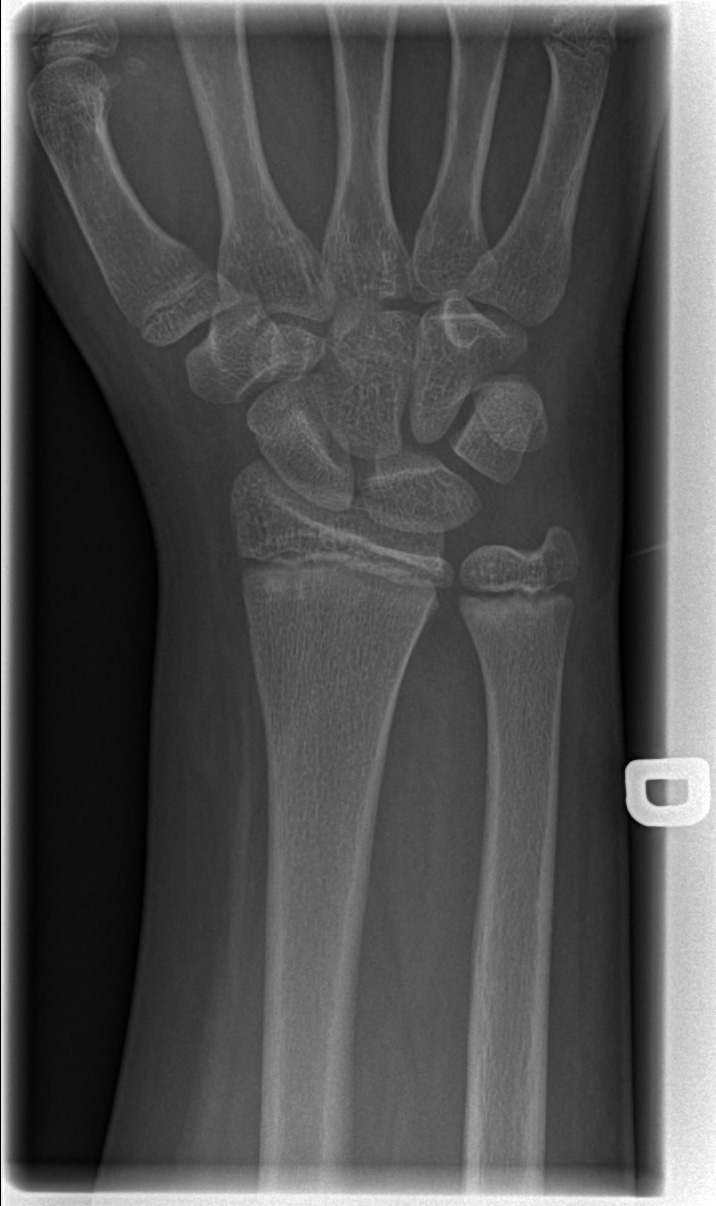
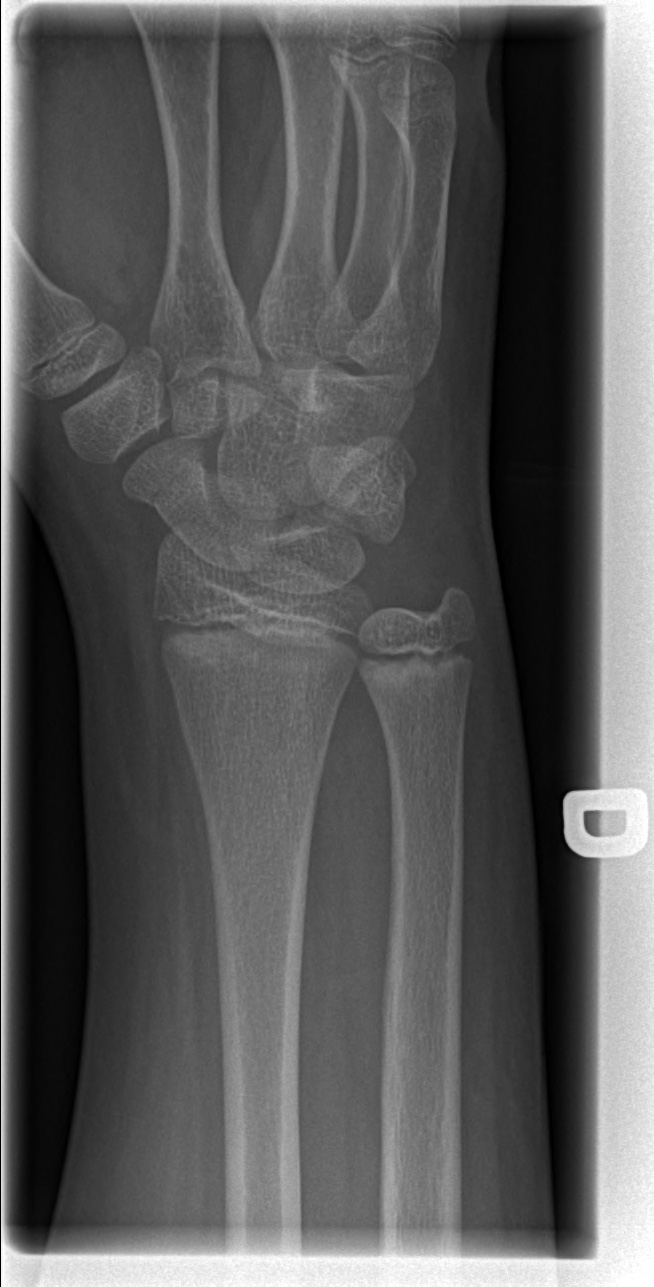
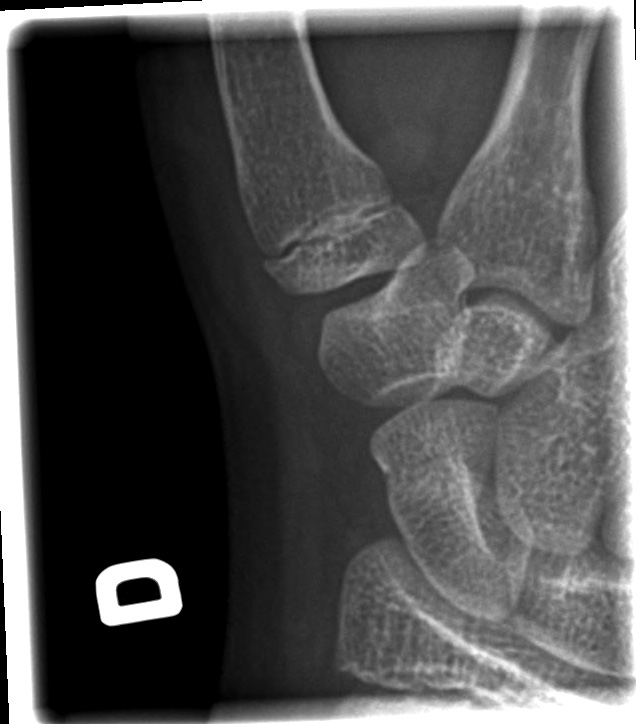
Pain to the anatomical snuffbox after a rollerblade accident (hyperextension wrist trauma).
Pain to the anatomical snuffbox after a rollerblade accident (hyperextension wrist trauma).
Distal pole fracture
Scaphoid fracture
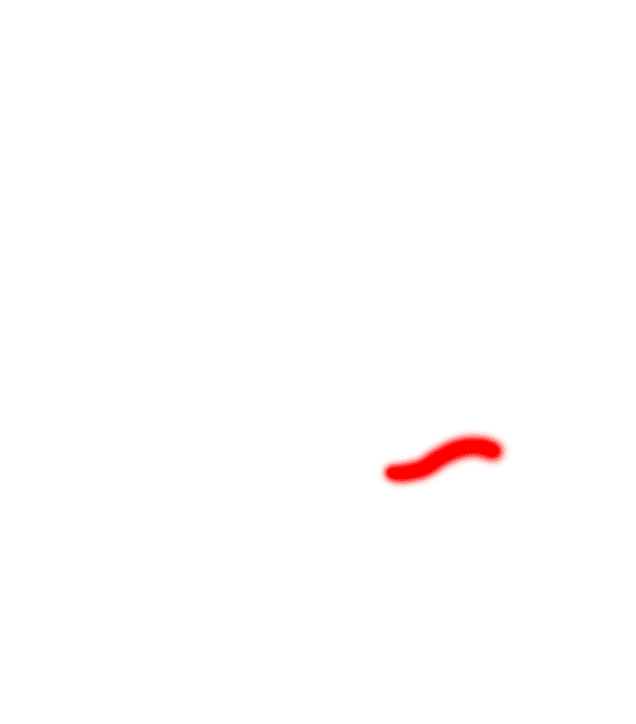
Linear hypodensity
Non-displaced fracture of the distal third (distal pole) of the scaphoid bone.
Waist fracture
Scaphoid fracture
A scaphoid waist fracture would be here.
Proximal pole fracture
Scaphoid fracture
A proximal pole fracture would be here.
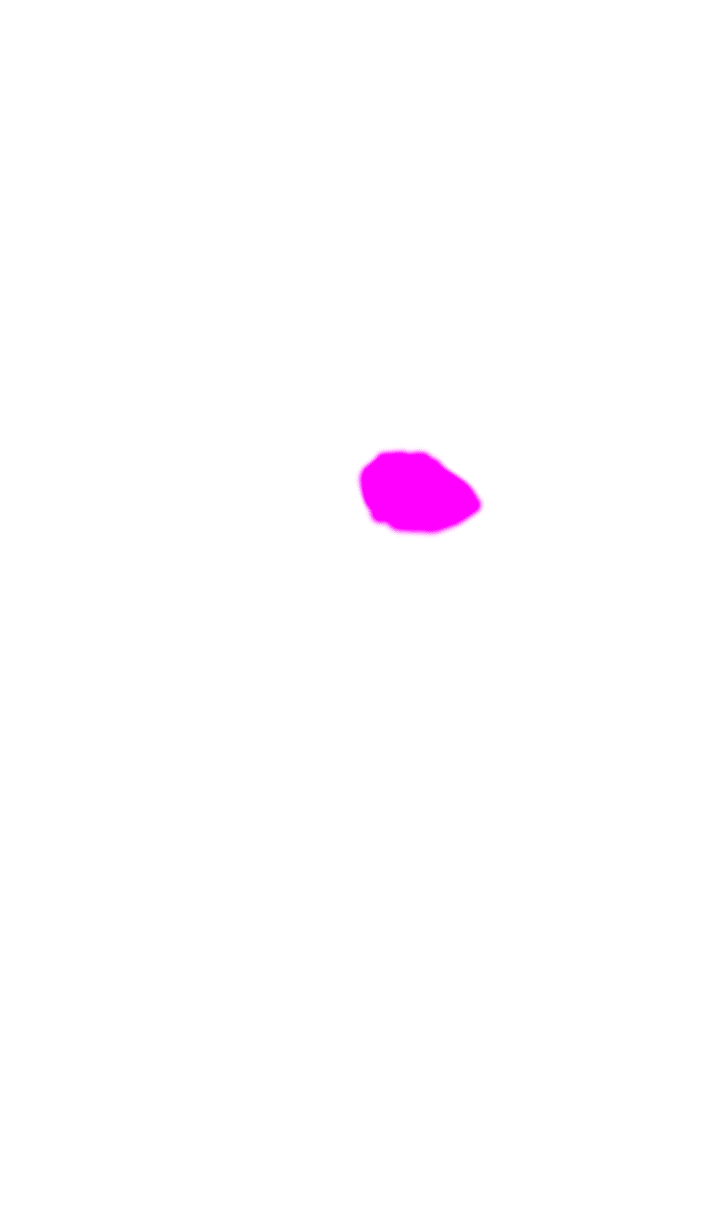
Scaphoid
Here are the contours of the scaphoid bone.
Lunate
Here are the contours of the lunate bone.
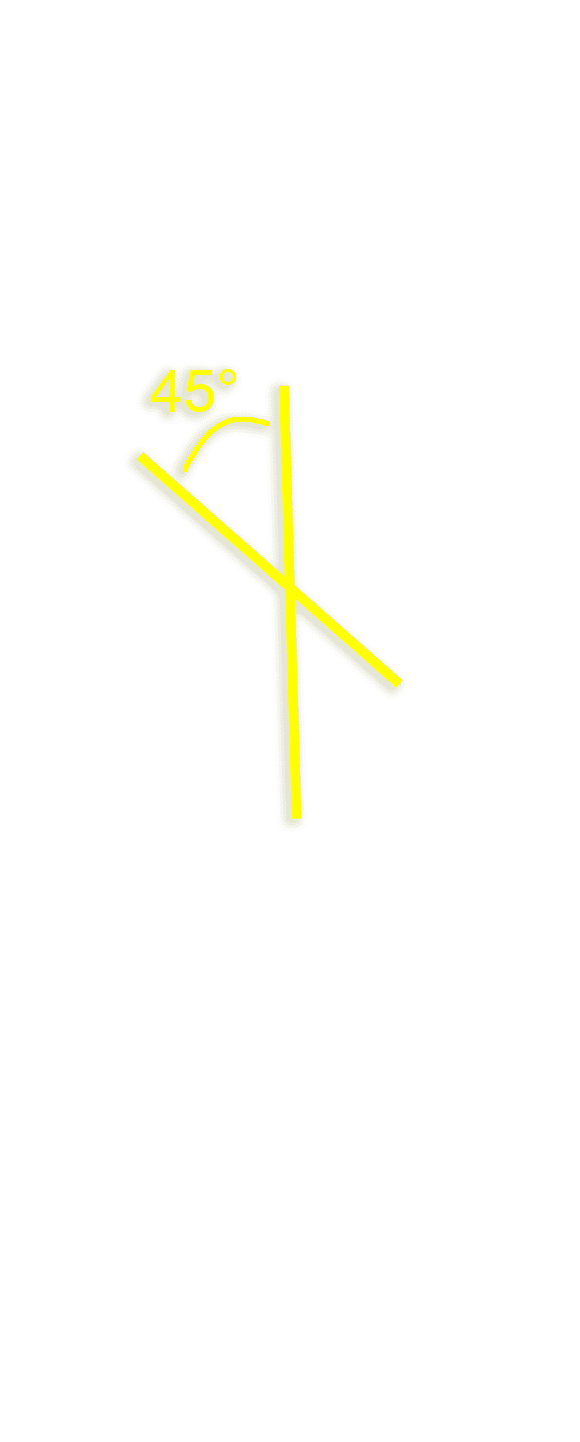
Scapholunate angle
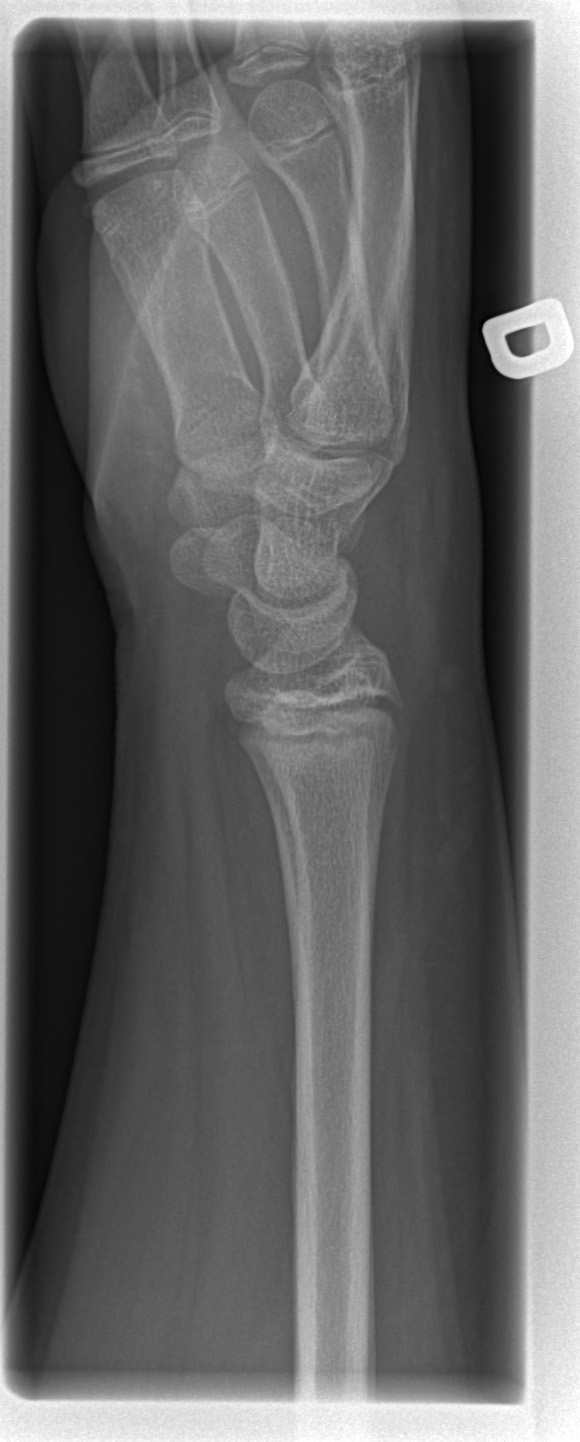
The integrity of the scapholunate and the lunotriquetral ligaments is assessed by measuring the scapholunate angle. This angle is normal here. If the scapholunate ligament is incompetent or if the scaphoid is fractured at its attachment, the scaphoid will rotate dorsally and the scapholunate angle will be greater than 70° (deformity known as a DISI for "dorsal intercalated segmental instability"). If the lunotriquetral ligament is incompetent, the scaphoid and the lunate bones will rotate into a volar position, reducing the scaphonulate angle to less than 30° (deformity known as a VISI for "volar intercalated segmental instability").
Scapholunate distance
If the scapholunate ligament is incompetent, the distance between the scaphoid and the lunate bones will increase (the normal is less than 2 mm).
Related chapters
- Atelectasie
- Pneumonie








Zoom:

test





Zoom:
test







Zoom:
test


Zoom:
test
.jpg
.png
107
4
7
../ortho/resources/studies/
../sandbox/